
How to track landing page views and conversions properly
A complete practical guide for tracking landing page views and conversions with clean attribution and decision-ready reporting.
Tracking starts with naming discipline
Most attribution confusion starts with inconsistent event and campaign naming.
Before adding scripts, define event names and campaign parameters in one shared convention. Without this, data is collected but not decision-ready.
If different team members use different names for the same action, reports fragment and optimization turns into guesswork.
Tracking quality is less about adding tools and more about keeping one event language across the full journey.
Define your measurement model before implementation
A strong tracking setup starts from business questions, not from dashboard templates. Decide what decisions you must make weekly, then map events that answer those decisions.
Most teams over-track and still miss the critical signal. Start with a compact event model and only expand when there is a clear decision use case.
- Question 1: which sources bring qualified visits?
- Question 2: which pages create action intent?
- Question 3: which campaigns generate qualified leads?
- Question 4: where does the funnel leak by source or segment?
Design one clean event taxonomy
Use predictable names so engineering, marketing, and sales all read the same reality. Keep names short, explicit, and stable.
Avoid duplicate meanings like lead_submit, form_submitted, and conversion_complete for the same action.
- Page event:
page_view - Intent event:
cta_click - Form progression:
form_startandform_submit - Business quality event:
qualified_lead - Optional downstream event:
booked_callorwon_opportunity
UTM: source truth for traffic context
Use UTM parameters in every campaign link. This is how you connect conversion behavior to traffic origin with consistent context.
Missing or inconsistent UTMs break source-level learning even when your event tracking is technically correct.
utm_source: platform source (google,facebook,newsletter)utm_medium: channel type (cpc,social,email)utm_campaign: business initiative nameutm_content: creative or ad variant
UTM governance rules that prevent reporting chaos
UTM governance is where most teams fail. One typo or naming mismatch can split data across multiple rows and hide real campaign performance.
- Keep source and medium values standardized across teams
- Use predictable campaign naming tied to business initiatives
- Document naming in one shared sheet
- Audit campaign links before launch day
Pixel: behavior events for ad optimization
Pixels are useful when ad platforms need behavior feedback for optimization. They are not a replacement for your analytics reporting layer.
Map events to intent progression so platforms can optimize for meaningful outcomes instead of low-value clicks.
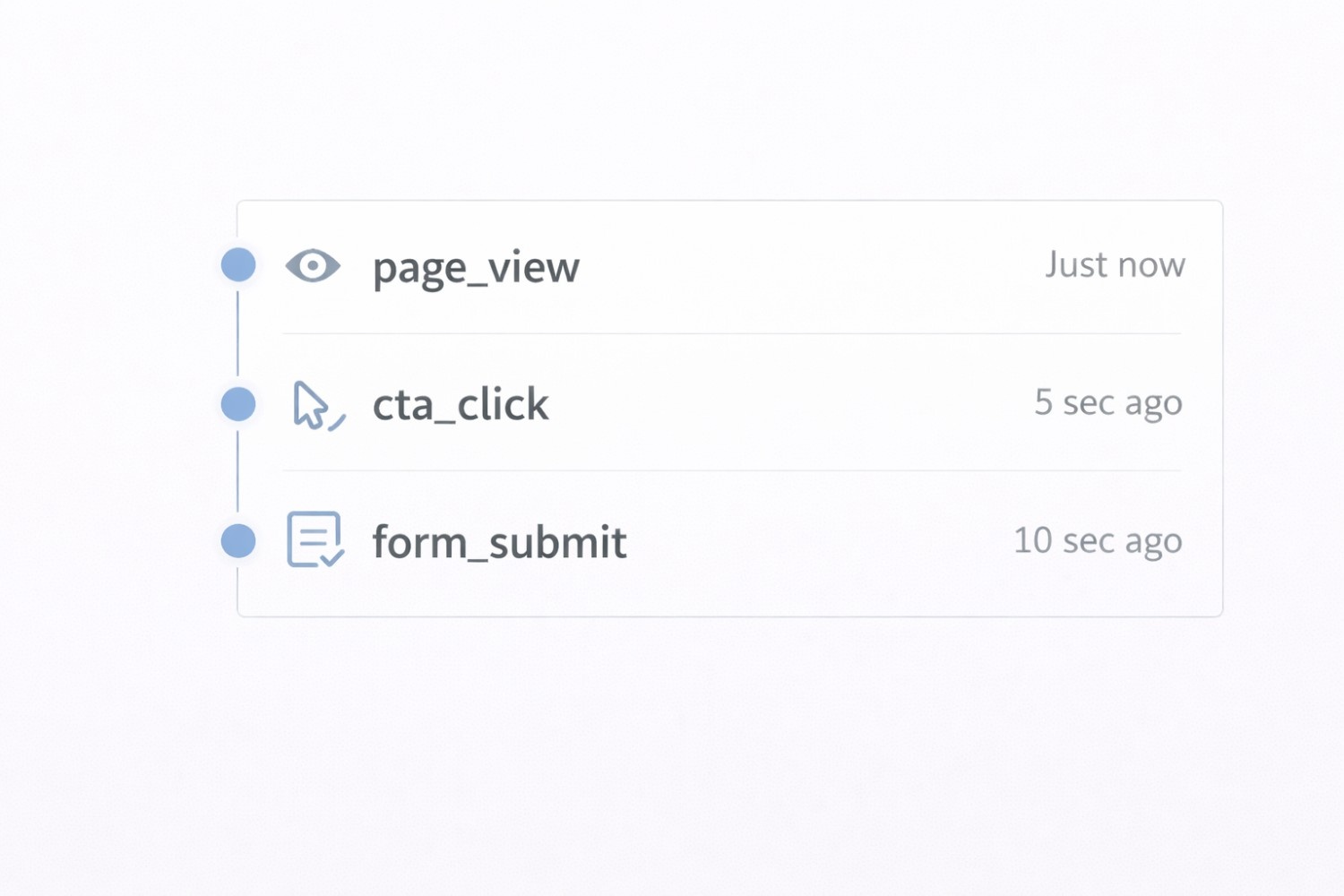
- Base event:
page_view - Mid event:
cta_click - Primary event:
form_submitorbooked_call - Quality event:
qualified_leadwhen possible - Validation: confirm event order and deduplication logic
Event architecture for landing pages
Think in layers: page events, engagement events, conversion events, and quality events. This gives cleaner diagnostics and better optimization opportunities.
If everything is tracked as one final conversion, you lose visibility into where intent is dropping.
- Page layer:
page_viewwith source context - Engagement layer: scroll depth,
cta_click,form_start - Conversion layer:
form_submit,booked_call - Quality layer:
qualified_leador sales-qualified state - Validation layer: deduplication and event-order checks
Google Analytics: decision reporting layer
Use analytics as the system of record for weekly decisions. Keep one consistent event naming model across web and campaign channels.
Your reporting should answer funnel questions quickly: where traffic comes from, where intent is created, and where qualification drops.
- Track landing page views by source/medium
- Track conversion events with the same naming convention
- Build one report connecting sessions -> CTA clicks -> conversions
- Compare paid and organic cohorts by conversion quality
Build one weekly dashboard your team actually uses
Dashboards fail when they are complex and disconnected from decisions. Keep one concise weekly report that directly informs action.
- Traffic quality by source and campaign
- CTA click-through rate by landing page
- Form completion rate and drop-off points
- Qualified lead rate and cost-per-qualified-lead
Practical implementation flow (first 7 days)
This sequence prevents the common mistake of collecting data before defining what business decision the data should support.
- Day 1: define event names and UTM naming sheet
- Day 2: install analytics and pixel base scripts
- Day 3: instrument
cta_click,form_start,form_submit - Day 4: validate events in debug tools and test deduplication
- Day 5: create dashboard for sessions, clicks, submits, and qualified leads
- Day 6: launch one paid and one organic campaign with strict UTM discipline
- Day 7: review quality by source and identify first optimization hypothesis
Quality tracking: volume is not enough
A common mistake is optimizing only for submit count. This can improve surface metrics while making sales outcomes worse.
Always pair volume metrics with quality metrics so campaign optimization stays aligned with revenue outcomes.
- Track raw submit volume and qualified lead rate together
- Measure source-level quality, not only aggregate performance
- Review lead quality by campaign and creative variant
- Do not scale spend on sources with weak qualification
Hard scenario: event data does not match CRM results
If analytics shows many conversions but CRM shows fewer real leads, you likely have duplicate firing, bot noise, or weak lead qualification logic.
- Audit conversion event deduplication rules
- Compare event timestamps with CRM create times
- Filter internal traffic and test sessions
- Track qualified lead as a separate conversion stage
Hard scenario: numbers look good but lead quality is weak
If CTR and submit rates are healthy but sales conversations are low quality, the issue is usually offer mismatch, weak qualification, or audience-intent mismatch.
- Split campaigns by intent level and compare conversion quality, not only volume
- Add one qualifying form field tied to buying timeline or use case
- Track qualified lead event separately from raw lead submit
- Tighten ad and headline language to reduce low-fit clicks
Hard scenario: paid and organic data conflict
Teams often see strong paid conversion rates but weaker organic quality, or the reverse. This usually indicates message and intent mismatch by channel.
- Create channel-specific variants with matched intent language
- Compare quality by
utm_mediumandutm_campaign - Adjust CTA commitment level by channel intent
- Review page sections where each traffic cohort exits
How Bizabee handles tracking execution
Bizabee supports landing page publishing with tracking-ready structure so teams can connect UTM, Pixel, and analytics in one practical flow instead of fragmented manual setup.
That helps you move faster while keeping naming consistency, measurable funnels, and cleaner attribution across parallel campaigns.
About the author
Yarden Gabay is the founder of Bizabee, an AI marketing platform for small teams. He writes about lead generation, landing pages, and the marketing systems that help small businesses grow without big budgets.